


Car Key Immobiliser Problem: Symptoms, Causes, and Fast Mobile Fixes

You turn the key, the engine fires for exactly two seconds, and then it cuts out. A flashing padlock symbol appears on your dashboard, and suddenly, your plans for the day are ruined. Dealing with a car key immobiliser problem is a high-stress situation that usually leads to fears of expensive towing fees and weeks of waiting for a main dealer appointment. It's a common frustration, but you don't have to be stranded or out of pocket whilst you wait for a solution.
We understand the urgency of getting your vehicle moving again without the hassle of a recovery truck. This guide provides the professional insight you need to identify whether the fault lies with your key or the car itself. You'll discover how to troubleshoot these security faults and why a mobile specialist is the fastest way to resolve the issue on-site. We'll preview the common causes of "handshake" failures and explain how expert programming bypasses the need for a costly dealership visit. By the end of this guide, you will know exactly how to get back behind the wheel with minimal fuss.
Table of Contents
What is a Car Key Immobiliser Problem?
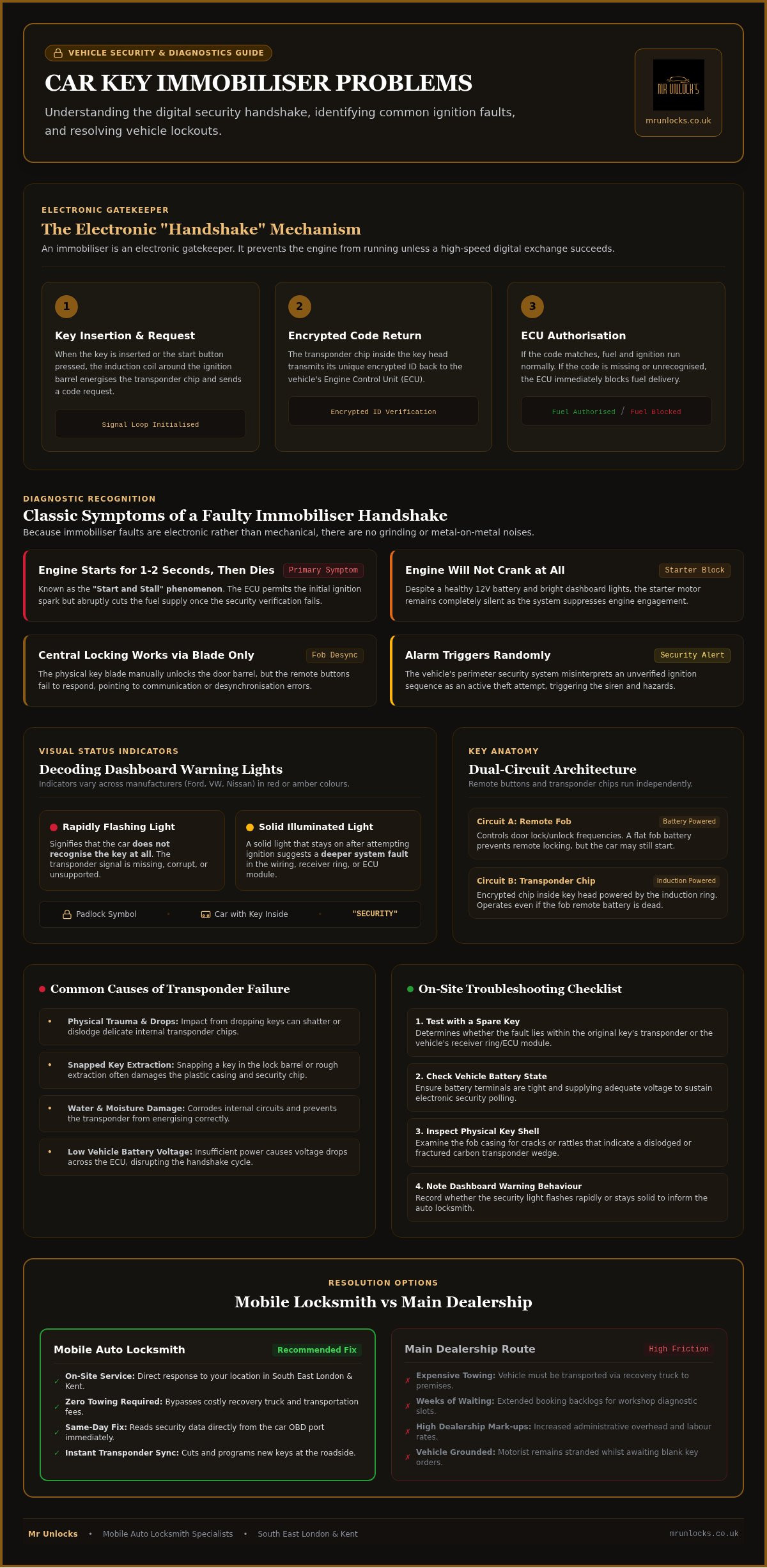
An immobiliser is more than just a security feature; it's the digital gatekeeper of your vehicle's engine. Essentially, it's an electronic security system designed to prevent the engine from running unless the correct, authorised key is present. Whilst this technology has slashed vehicle theft rates globally, a car key immobiliser problem can turn this protection against you. Instead of stopping a thief, a synchronisation fault leaves you, the rightful owner, stranded on your driveway or at the roadside. These issues are almost always electronic rather than mechanical, meaning you won't hear any grinding or metal-on-metal noise when things go wrong. The car simply refuses to stay running.
This system relies on a high-speed digital "handshake." When you insert your key or press the start button, the car's Engine Control Unit (ECU) sends a request for a unique security code. The key responds with its encrypted ID. If the ECU doesn't recognise the code or doesn't receive one at all, it immediately kills the fuel supply or ignition. Most modern electronic engine immobilisers work this way to ensure high-level security. When this handshake fails, the communication loop is broken, and the vehicle remains immobilised for safety.
The Role of the Transponder Chip
Inside the plastic head of your key sits a tiny transponder chip. This component holds the unique code your car needs to start. It doesn't usually need a battery to send this specific signal; it's powered by an induction coil around your ignition barrel. However, physical trauma can easily kill it. If you've had a key snapped in car lock, the shock or the extraction process can sometimes damage this delicate chip. Water damage or heavy impact from dropping your keys are also common culprits that lead to a car key immobiliser problem.
The Immobiliser Warning Light
Your dashboard is designed to tell you exactly when the security handshake has failed. Look for a symbol of a padlock, a car with a key inside it, or the word "Security" flashing in red or amber. A rapidly flashing light usually indicates that the car does not recognise the key at all. A solid light that stays on after you try to start the car often suggests a deeper system fault. Check your vehicle manual to confirm your specific symbol. Ford, VW, and Nissan all use slightly different icons to signal a security lockout.
Common Symptoms of a Faulty Immobiliser Handshake
Identifying a car key immobiliser problem starts with observing how the vehicle reacts during the ignition sequence. It isn't always a case of a dead car; sometimes the symptoms are deceptively subtle. You might find that the car behaves normally until the final stage of starting, or it might refuse to engage the starter motor entirely. Recognising these specific behaviours helps you communicate the fault clearly when calling for assistance.
Common indicators of a failed handshake include:
Engine starts for 1-2 seconds and then immediately dies. This is the most frequent sign that the ECU has blocked the fuel supply.
The engine won't crank at all. Despite a healthy battery and bright dashboard lights, the starter motor remains silent.
Central locking works via the key blade only. You can unlock the door manually, but the remote buttons are completely unresponsive.
The alarm triggers randomly. The vehicle's security system may misinterpret your attempt to start the car as a theft attempt.
The 'Start and Stall' Phenomenon
This is the most frustrating symptom. You hear the engine roar to life, giving you a brief moment of hope, before it suddenly stalls. This happens because the Engine Control Unit (ECU) allows the initial spark but cuts the fuel delivery once it fails to receive the correct security handshake. It is a deliberate security feature designed to stop unauthorised users from driving away. According to safety experts, immobilising-type anti-theft devices are engineered to prevent ignition bypass; this "start-stall" cycle is the primary way they achieve that. This sequence is the most common sign of a lost transponder sync.
Unresponsive Remote Fobs
Many drivers assume that if their remote buttons don't work, the car won't start. This isn't always true. The remote locking frequency and the immobiliser transponder chip operate on different circuits. Your car might start perfectly even if the remote buttons are dead, or you could have functioning buttons but a complete immobiliser failure. If you are experiencing these mixed signals, our car key programming London guide explains how these separate systems are coded. If you're stuck in South East London or Kent with these symptoms, Mr Unlocks can diagnose the fault at your location to get you moving immediately. We carry the diagnostic tools required to resync your key and car on the spot.
Why Immobilisers Fail: Key Fobs vs. Vehicle Modules
When you're stuck, you need to know if the fault is in your hand or under the bonnet. Most immobiliser faults originate in the key fob, but vehicle-side modules are equally capable of locking you out. A common car key immobiliser problem occurs when the electronic link between these two points is severed. Mr Unlocks provides an auto locksmith for all car makes, ensuring we can pinpoint exactly which component has failed using dealer-level diagnostics at your location.
Physical Key Damage
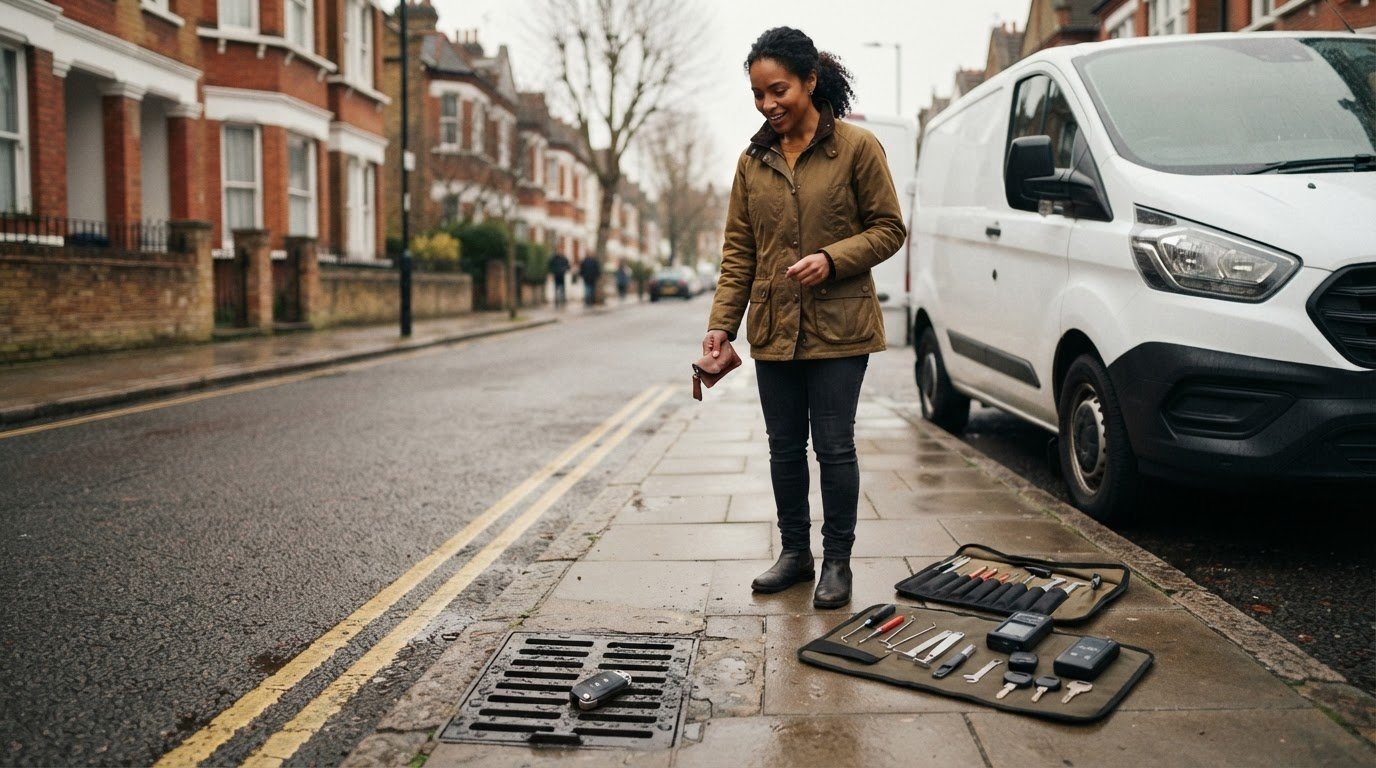
The transponder chip inside your key is a delicate piece of glass or ceramic. Dropping your keys on a hard pavement in Bromley or Bexley can easily crack this internal component. You won't see the damage on the outside, but the chip will stop talking to the car. We also see many failures caused by DIY battery replacements. If you slip with a screwdriver whilst changing the coin cell, you can easily scratch the circuit board or dislodge the transponder. Try your spare key immediately. It's the fastest way to confirm if your main key is the culprit. If the spare works, the issue is definitely the key.
Wiring and Antenna Faults
If the key is fine, the focus shifts to the "reader coil" or antenna ring. This is a plastic loop around the ignition barrel or hidden behind the start button. It acts as the bridge for the security handshake. Over time, vibration or heat cycles inside the cabin can cause the wiring to work loose. Moisture ingress amongst the dashboard electronics can also corrode the immobiliser module itself. These vehicle-side faults are complex. They require specialist diagnostic software to identify. You can't fix these with a basic OBD scanner from a retail shop. We use advanced tablets to talk directly to the car's brain and find the break in communication.
A flat car battery is a frequent but overlooked cause of these issues. When the voltage drops too low during a start attempt, the ECU can "forget" the synchronisation data. It essentially wipes the memory of your keys to protect the system from a power surge. This leaves you with a car that won't start even after you've jump-started the battery. This digital mismatch is a classic car key immobiliser problem that requires a professional resync to resolve. Don't risk further damage by trying to bypass the system yourself. We come to you and fix it on-site.
Troubleshooting and Temporary Fixes for Immobiliser Issues
Before you call for a recovery truck, there are several simple checks you can perform at the roadside. These steps help you determine if you are facing a permanent hardware failure or a temporary glitch. Start by trying your spare key. This is the most effective way to rule out a fault with your primary transponder. If the car starts with the spare, you have confirmed that the car key immobiliser problem is limited to a single key and not the vehicle's internal computer.
Check your car battery voltage next. Modern security systems are incredibly sensitive to power fluctuations. If your battery is old or partially discharged, it might provide enough power to light the dashboard but not enough to maintain a stable security handshake. You can also attempt a "hard reset" by disconnecting the negative battery terminal for 10 minutes. This drains residual capacitance and forces the modules to reboot. Be aware that you may need your radio code afterwards, so only do this if you have your vehicle's security pass handy.
Whilst you are inspecting the key, check the fob battery. It's a common misconception that a dead fob battery causes immobiliser failure. In reality, the transponder chip is usually a passive device powered by induction from the ignition barrel. Replacing the battery rarely fixes a non-start issue, though it will resolve unresponsive remote buttons. If these basic checks fail, contact Mr Unlocks for a professional mobile diagnostic to get an immediate resolution at your location.
The 10-Minute Ignition Trick
Some older models, particularly certain Vauxhall or Ford vehicles, have a built-in resync procedure. Turn the ignition to the 'On' position so the dash lights are active, but do not crank the engine. Leave the car in this state for exactly 10 minutes. This allows the system to re-establish a stable connection with the key. Do not attempt to crank the engine repeatedly during this window. Constant starting attempts will drain your battery and can flood the engine with fuel, which creates a mechanical problem on top of your electronic one.
Checking for Interference
Electronic interference can easily mask the transponder signal. If your car key is on a heavy bunch with office security cards or other proximity fobs, remove it. These devices can block the low-frequency radio signal needed for the handshake. Similarly, certain aftermarket dash cams or cheap USB chargers can emit electronic noise that disrupts the immobiliser module. Clear the area around the ignition barrel of any extra electronic devices to ensure a clean signal path for the key.
Professional Solutions: Why a Mobile Locksmith is the Best Fix
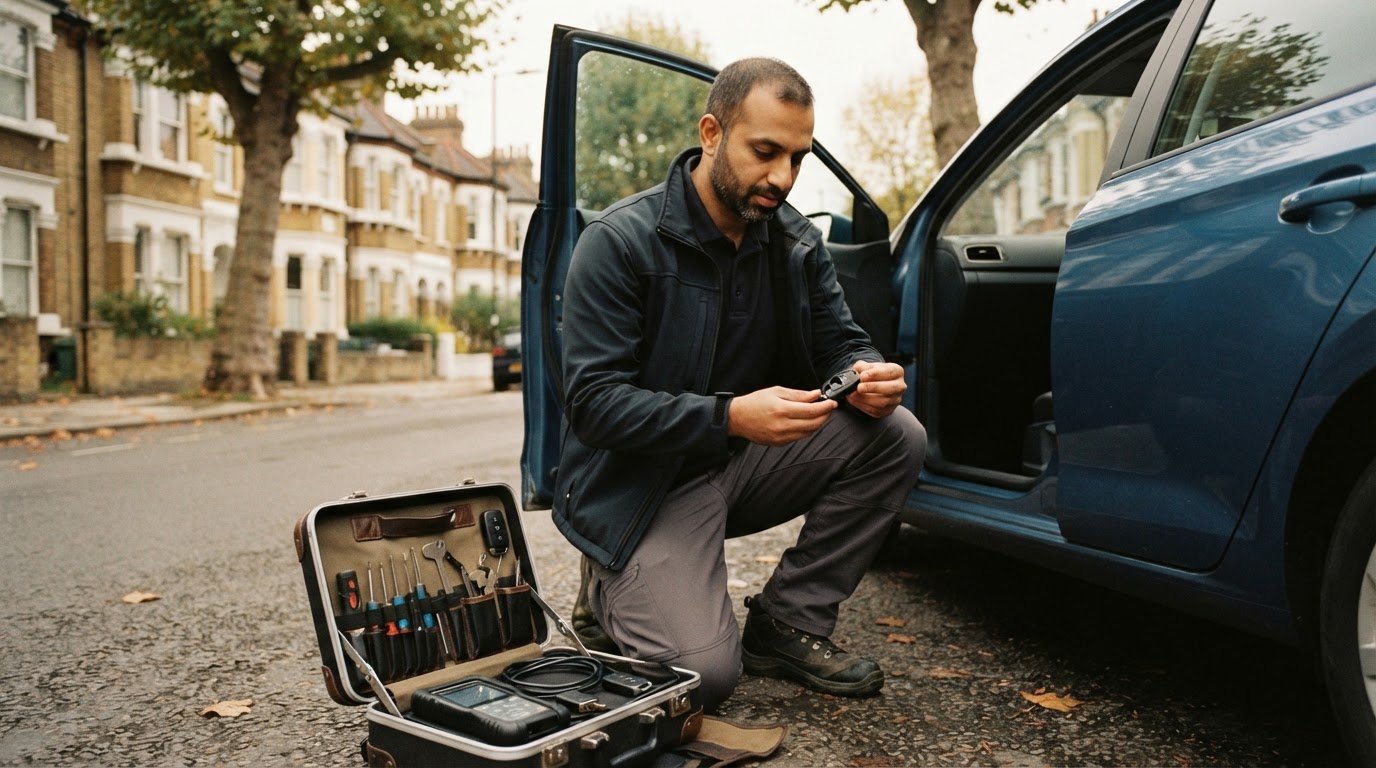
When you face a car key immobiliser problem, your first instinct might be to call the manufacturer. However, a mobile auto locksmith is almost always the more efficient choice. Unlike a main dealer, we don't require you to hire a recovery truck. We bring the workshop to your driveway in Lewisham, your workplace in Greenwich, or the roadside in Bexley and Bromley. Mr Unlocks specialises in reading security pincodes directly from your vehicle's modules, bypassing the red tape and administrative delays that usually plague dealership repairs. This non-destructive approach ensures your vehicle's security remains intact whilst we restore communication between the key and the engine control unit.
Choosing a mobile expert means you aren't just paying for a service; you're paying for immediate resolution. We carry the same high-level diagnostic equipment as the dealerships but with the added advantage of mobility. We can extract encrypted data from your car's brain right where it's parked. This removes the need for you to organise transport for a non-running vehicle, which is often the most stressful part of a car key immobiliser problem. Our team is trained to handle all car makes, ensuring that your specific immobiliser system is treated with professional precision and care.
On-Site Reprogramming Explained
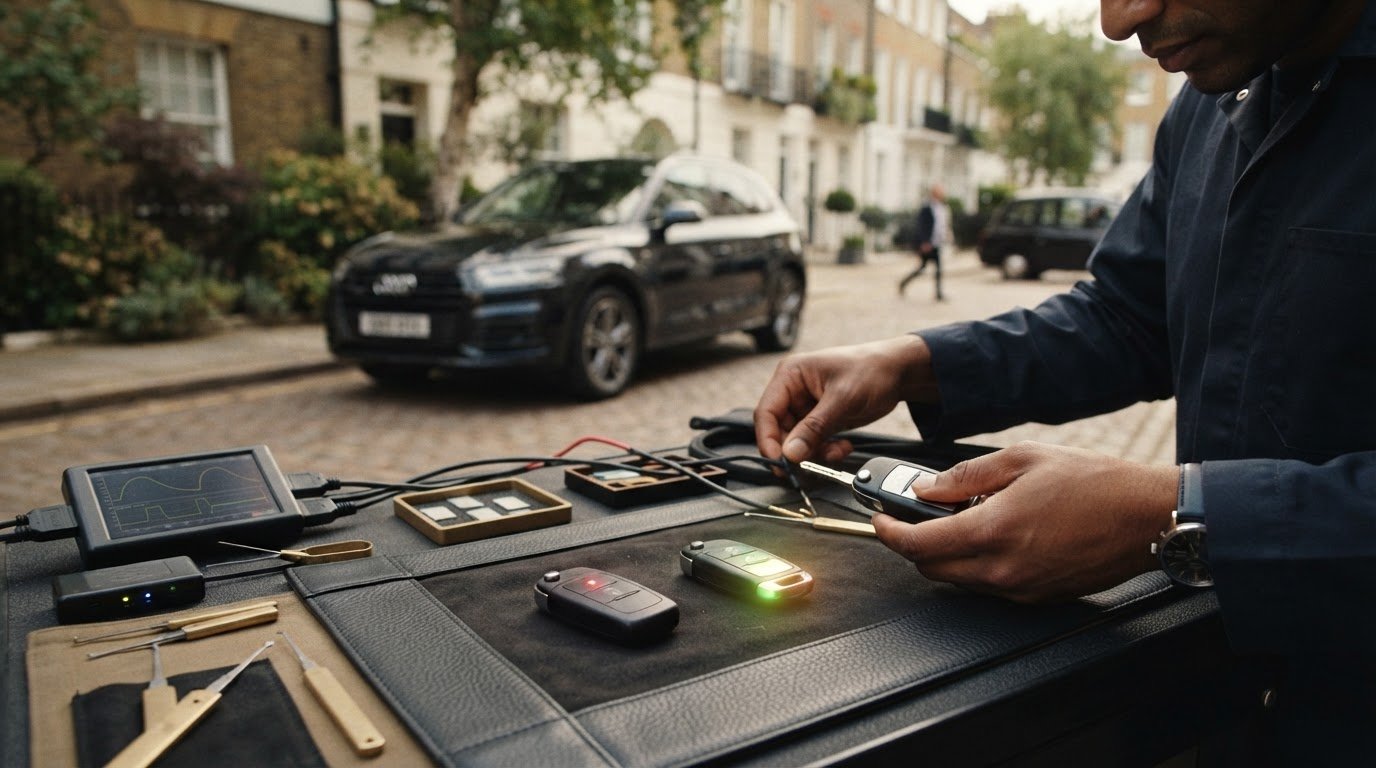
Our technicians use advanced diagnostic tablets plugged directly into your vehicle's OBD port. This allows us to "teach" the car's security system to recognise your transponder chip again. It isn't a temporary bypass or a "hack" that leaves your car vulnerable. It's a permanent software resync that restores the factory-standard security handshake. We can often clear old, lost keys from the system's memory at the same time, which adds an extra layer of security if you've recently misplaced a set. Whether your car has lost its memory due to a flat battery or a corrupted chip, on-site programming is the most reliable way to get back on the road within the hour.
Avoiding the Dealer Trap
Dealerships often present a logistical nightmare of hidden expenses. You're typically looking at a seven-day wait for an appointment, plus the premium labour rates that come with a glass-fronted showroom. On top of that, you'll have to pay for a recovery truck to get the car to their service centre. Many dealers also lack the specialised coding tools required for older vehicles, often suggesting expensive module replacements instead of a simple resync. Mobile specialists have the flexibility to work on all makes and models right where they sit, saving you hundreds of pounds in unnecessary parts and transport. If you're stuck in South East London or Kent, contact Mr Unlocks for 24/7 immobiliser help. We provide same-day service that puts you back in control without the dealer-sized bill.
Get Back Behind the Wheel Today
A car key immobiliser problem is a major inconvenience, but it doesn't have to be a financial or logistical disaster. By identifying the symptoms early and using simple troubleshooting steps, you can often determine the quickest path to a fix. Most security faults are digital glitches that can be resolved without replacing expensive vehicle modules or waiting days for a dealership appointment.
You don't need a recovery truck or a week of downtime. Mr Unlocks provides a 24/7 mobile response across London and Kent, bringing dealer-level programming tools directly to your location. We specialise in non-destructive entry and expert key programming for all vehicle makes, ensuring your car stays secure whilst we restore its functionality on-site. Whether you are at home, work, or the roadside, help is always available.
Stop the stress and avoid the dealer trap. Get 24/7 Expert Immobiliser Help from Mr Unlocks and let a professional handle the technical work for you. You'll be back on the road before you know it.
Frequently Asked Questions
Can a car immobiliser be bypassed or disabled?
Bypassing a modern immobiliser is rarely a viable option because the system is deeply integrated into the car's Engine Control Unit. Attempting to disable it can cause permanent damage to your vehicle's sensitive electronics. Instead of a risky bypass, the professional solution is to resync the existing components. Mr Unlocks provides 24/7 mobile assistance across London to reprogramme your keys, ensuring the factory security remains intact whilst restoring your ability to start the engine.
Will a flat key battery cause an immobiliser problem?
In most cases, a flat key battery won't cause a car key immobiliser problem. The transponder chip inside your key is typically a passive device powered by an induction coil around the ignition barrel. However, if you have a proximity or keyless start system, a weak battery can prevent the car from detecting the key. Replacing the CR2032 battery is a good first step, but a non-starting engine usually indicates a deeper synchronisation fault.
How much does it cost to fix an immobiliser fault in London?
Costs vary significantly depending on the vehicle make and the specific nature of the electronic fault. Factors such as whether you need a simple resync or a completely new transponder chip will influence the final price. Choosing a mobile auto locksmith like Mr Unlocks is often more cost-effective than a main dealer, as you avoid expensive towing fees and premium labour rates. We provide transparent service across South East London and Kent at any hour.
Why is my car immobiliser light flashing rapidly?
A rapidly flashing security light indicates that the vehicle's immobiliser module does not recognise the key you are using. This signifies a failed electronic handshake between the transponder and the car's computer. It often happens after a battery change, a heavy drop, or if the key has been near strong magnets. If the light doesn't go out after a few seconds, the system has entered a lockout state, requiring professional diagnostic tools to reset the connection.
Can a mobile locksmith fix immobiliser problems at the roadside?
Yes, a specialist mobile locksmith can resolve most immobiliser issues at the roadside or on your driveway. Mr Unlocks carries advanced diagnostic tablets that plug directly into your car's OBD port to read security codes and reprogramme keys on-site. This service is available 24/7 across Lewisham, Bromley, and Greenwich. It eliminates the need for a recovery truck and allows you to continue your journey without a lengthy wait at a main dealer centre.
What should I do if my car starts and then immediately stalls?
This "start and stall" behaviour is a classic symptom of a car key immobiliser problem. The car allows the engine to fire briefly but cuts the fuel supply when it fails to verify the key's identity. Check your dashboard for a flashing padlock or car icon. Try your spare key immediately to see if the issue is limited to one fob. If the problem persists with both keys, you likely have a fault with the vehicle's antenna ring.
Will my spare key work if the main immobiliser module is faulty?
If the central immobiliser module or the antenna ring around the ignition has failed, your spare key will not work. These components are responsible for reading every key presented to the vehicle. However, if the fault is simply a corrupted chip inside your primary key, the spare should start the car perfectly. Testing your spare is the fastest diagnostic tool you have to determine if the fault is key-side or vehicle-side.
Can a locksmith program a new key if I have lost the original?
Yes, Mr Unlocks can create and program a new key even if you have lost the original set. We use specialist equipment to extract the unique security pincode directly from your vehicle's computer. This allows us to cut a fresh blade and code a new transponder chip to match your car. This "all keys lost" service is available 24/7 across Bexley and Kent, providing a much faster alternative to waiting for a dealer replacement.
Comments